Network Sniffing: tcpdump, Wireshark & Scapy
tcpdump · Wireshark · Scapy · VMware Workstation Pro 17
Context
This project is the "network layer" counterpart to an earlier password-cracking project. Where that project showed how a stored password can be guessed, this one demonstrates how a password in transit can be read directly if it isn't encrypted.
The goal: capture raw network traffic with the industry's three reference tools (tcpdump, Wireshark, Scapy), read the exact anatomy of a packet, and concretely demonstrate — by intercepting an FTP credential sent in plaintext — why protocols like FTP or Telnet are now considered dangerous in production.
Objectives
- Capture and analyze raw network traffic with tcpdump and Wireshark (ARP, ICMP, TCP).
- Demonstrate plaintext reading of a full HTTP exchange via Follow HTTP Stream.
- Intercept FTP credentials sent without encryption.
- Build a custom network sniffer in Python with Scapy.
Project walkthrough
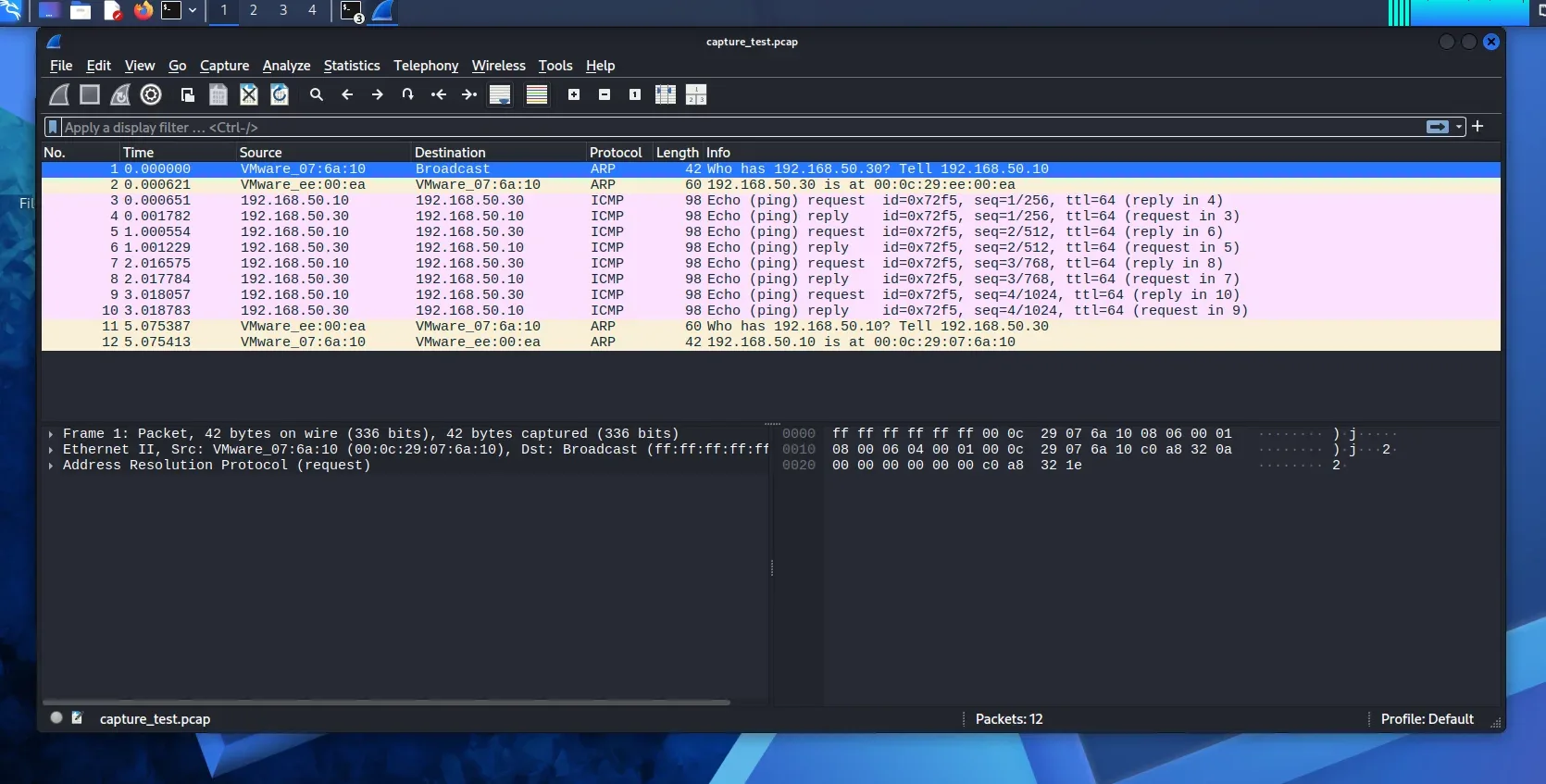
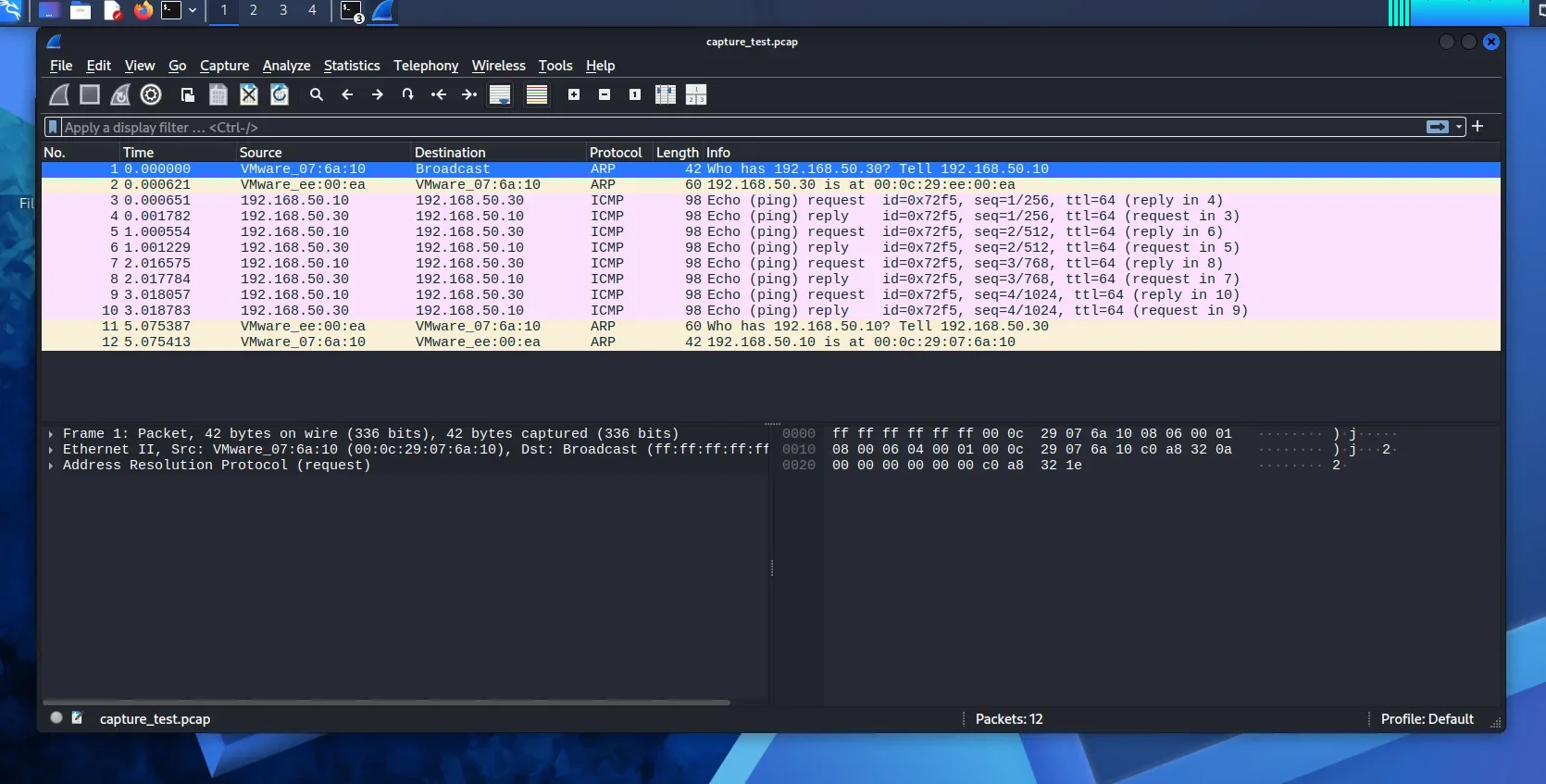
- 1Baseline capture with tcpdumpI captured ARP and ICMP traffic between the two lab machines, saved it to .pcap, and replayed it from the command line.
- 2Visual analysis with WiresharkI opened the capture and explored the packet anatomy layer by layer (Ethernet → IP → TCP/ICMP), applying display filters.
- 3Plaintext HTTP interceptionI started a test HTTP server, captured the targeted traffic, and read the full request and response via Follow HTTP Stream.
- 4FTP credential interceptionI deployed a test vsftpd server, connected with a dedicated account, and read the login/password directly in cleartext in the Wireshark packet list.
- 5Custom Python sniffer (Scapy)I wrote a script capturing and analyzing ARP/TCP/UDP traffic live, and successfully tested it on real traffic (ARP resolution, active SSH session).
Results
- Protocols analyzed
- ARP, ICMP, TCP, HTTP, FTP
- FTP credentials intercepted in plaintext
- 1 (USER + PASS)
- Packets captured (Scapy script)
- live ARP + TCP traffic
- Tools mastered
- 3 (tcpdump, Wireshark, Scapy)
Key takeaway
Sniffing never "breaks" encryption: an observer capturing HTTPS or SSH traffic sees unreadable bytes, not content. This project illustrates why widespread TLS adoption has made passive sniffing largely obsolete as a direct threat to content — the real risk today lies in legacy plaintext protocols (FTP, Telnet) and traffic metadata.
Stack & tools
- Kali Linux (capture + traffic generation) and Debian (target), on VMware Workstation Pro 17
- tcpdump (command-line capture, BPF filtering)
- Wireshark (visual analysis, Follow HTTP Stream)
- Scapy / Python (custom network sniffer)
- vsftpd (test FTP server)
Screenshots